-797x638.jpg "Indian auroch (Bos primigenius namadicus)")
1-797x638.jpg "Indian auroch (Bos primigenius namadicus)")
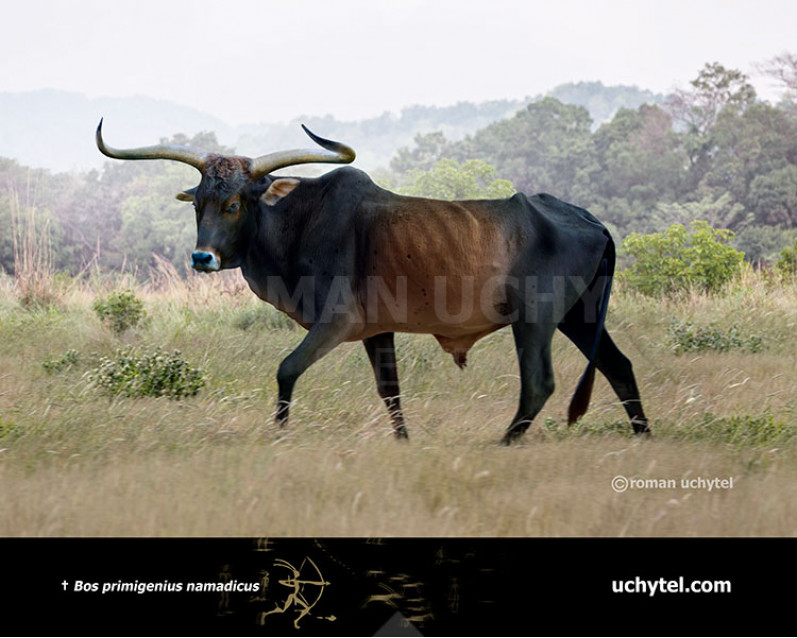
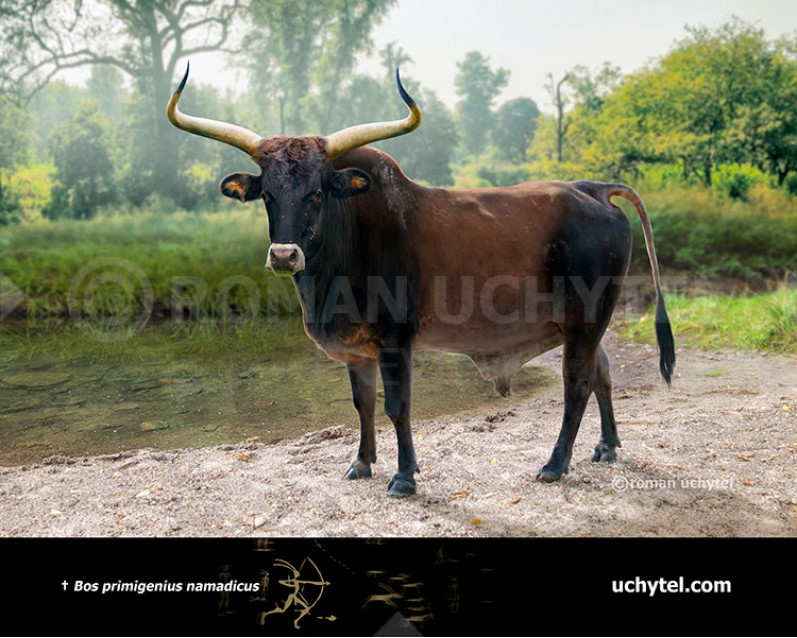
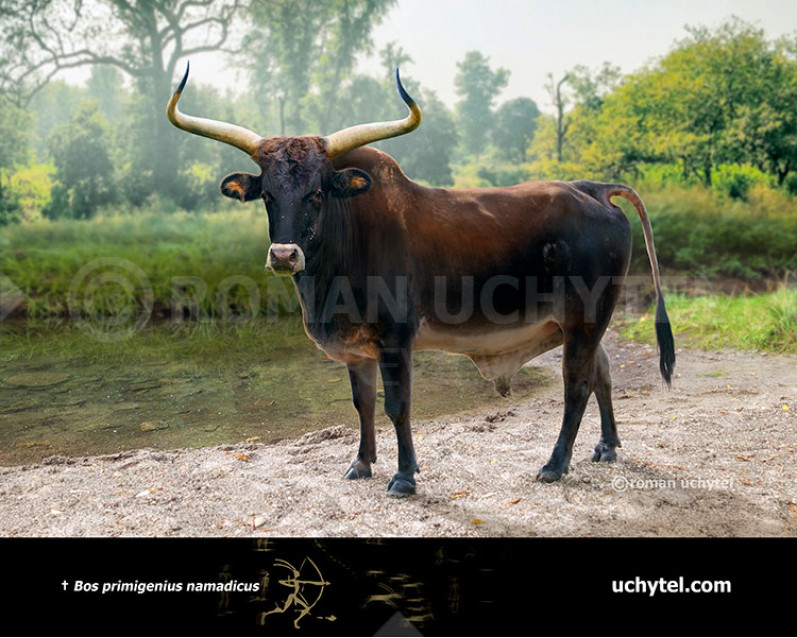
Indian auroch (Bos primigenius namadicus)
202167202167Indian auroch (†Bos primigenius namadicus (Falconer, 1859))
Order: Artiodactyla
Family: Bovidae
Time period: the Late Pleistocene (South Asian Stone Age.).
Size: 2,3 m in length, 170 cm in height, 600 kg of weight
The Indian aurochs is an extinct subspecies of aurochs that inhabited West Asia and the Indian subcontinent from the Late Pleistocene until its eventual extinction during the South Asian Stone Age. With no remains younger than 3,800 YBP ever recovered, the Indian aurochs was the first of the three aurochs subspecies to become extinct; the Eurasian aurochs (B. p. primigenius) and the North African aurochs (B. p. mauritanicus) persevered longer, with the latter being known to the Roman Empire, and the former surviving until the mid-17th century in Central Europe. Two breeds/subspecies of domestic cattle (Bos taurus), the sanga (B. t. africanus) and the zebu (B. indicus), can trace their genetic heritage directly to the Indian aurochs.
The Indian aurochs was probably smaller than its Eurasian counterpart but had proportionally larger horns. Because the range of the aurochs species was continuous from the Atlantic coasts of North Africa and Europe to Bengal, it is uncertain whether there was a distinction or a continuum between the Eurasian, North African and Indian subspecies.
The last common ancestor of Indian aurochs and Eurasian aurochs (B. p. primigenius) is estimated to have lived about 150±50 ka BP, based on genetic analyses of living zebus and taurine cattle, the domesticated but heavily interbred descendants of those two aurochs subspecies. Zebu and many Sanga cattle breeds are phenotypically distinguished from taurine cattle by the presence of a prominent shoulder hump.


-70x56.jpg "4")
1-70x56.jpg "5")
Indian auroch (†Bos primigenius namadicus (Falconer, 1859))
Order: Artiodactyla
Family: Bovidae
Time period: the Late Pleistocene (South Asian Stone Age.).
Size: 2,3 m in length, 170 cm in height, 600 kg of weight
The Indian aurochs is an extinct subspecies of aurochs that inhabited West Asia and the Indian subcontinent from the Late Pleistocene until its eventual extinction during the South Asian Stone Age. With no remains younger than 3,800 YBP ever recovered, the Indian aurochs was the first of the three aurochs subspecies to become extinct; the Eurasian aurochs (B. p. primigenius) and the North African aurochs (B. p. mauritanicus) persevered longer, with the latter being known to the Roman Empire, and the former surviving until the mid-17th century in Central Europe. Two breeds/subspecies of domestic cattle (Bos taurus), the sanga (B. t. africanus) and the zebu (B. indicus), can trace their genetic heritage directly to the Indian aurochs.
The Indian aurochs was probably smaller than its Eurasian counterpart but had proportionally larger horns. Because the range of the aurochs species was continuous from the Atlantic coasts of North Africa and Europe to Bengal, it is uncertain whether there was a distinction or a continuum between the Eurasian, North African and Indian subspecies.
The last common ancestor of Indian aurochs and Eurasian aurochs (B. p. primigenius) is estimated to have lived about 150±50 ka BP, based on genetic analyses of living zebus and taurine cattle, the domesticated but heavily interbred descendants of those two aurochs subspecies. Zebu and many Sanga cattle breeds are phenotypically distinguished from taurine cattle by the presence of a prominent shoulder hump.